
What to Do After an E-Bike Accident in Florida: Steps to Take
Our Commitment To Excellence






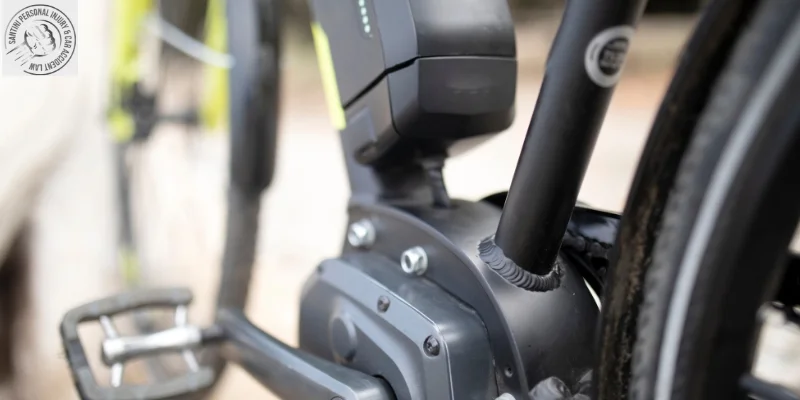
After an e-bike accident in Florida, what you do in the first hours, days, and weeks matters more than most riders realize. The steps you take right now protect your health, preserve evidence, and determine whether you can recover compensation later.
Florida law treats e-bikes like bicycles, not motor vehicles, and that distinction changes how insurance works, who pays, and what compensation you could recover. Santini Personal Injury & Car Accident Law helps e-bike riders across Tampa and Riverview with their claims, guiding them through the steps to fair compensation.
Get to Safety and Call 911
If you’re still at the scene, move out of the roadway if you can and call 911. A police report creates an official record of the crash, and it becomes one of the most important documents in any injury claim.
If the crash already happened hours or days ago and you didn’t do any of this, that’s OK. Don’t panic.
An attorney can request the police report after the fact, track down witnesses, pull surveillance footage before it’s overwritten, and reconstruct the scene using photos, medical records, and other evidence. Cases are built with what’s available, not with a perfect checklist.
Why You Need Medical Treatment Even If You Feel Fine
Adrenaline masks pain. Some of the most serious e-bike injuries (concussions, internal bleeding, and soft tissue damage) don’t produce obvious symptoms for hours or even days. Be sure to go to the emergency room or an urgent care facility the same day as your crash, or immediately if you have not already. Tell the provider it was an e-bike accident.
Medical records that connect your injuries to the crash become critical if you file a claim later. Gaps in treatment give insurance adjusters something to point to when they try to minimize your injuries.
How to Preserve Evidence at the Scene
Evidence disappears fast. Surveillance cameras overwrite footage. Skid marks fade. Witnesses forget details within days. If you’re physically able, protect the evidence before you leave the scene by:
- Photographing your e-bike from multiple angles, including the damage, the battery, and the display panel
- Photographing the road conditions, bike lane markings, traffic signals, and any debris
- Taking pictures of your injuries, even if they look minor
- Recording a short voice memo describing what happened while it’s fresh
- Do not repair, discard, or modify your e-bike or helmet. The bike itself can become evidence, especially if a product defect contributed to the crash
Under new legislation, 2026 may be the first year that law enforcement would need to track e-bike crash data as a separate category. The lack of state-level data reporting makes your own documentation that much more crucial.
Understand How Florida’s Insurance Rules Apply to E-Bike Riders
Under Florida Statutes § 316.003(23), an e-bike is defined as a bicycle or tricycle with fully operable pedals and an electric motor of less than 750 watts. That means e-bike owners aren’t required to carry auto insurance, register the bike, or hold a driver’s license to ride one. It also means there’s no mandatory liability policy waiting to pay your medical bills after a crash.
But that doesn’t mean you have no coverage. If a motor vehicle hit you while you were riding, Florida’s Personal Injury Protection (PIP) system may still apply through your own auto insurance policy, or from the at-fault driver’s auto policy. If you don’t own a car, a household member’s auto policy or your health insurance might provide some coverage.
And if the driver who hit you has no bodily injury coverage, or not enough of it, your own uninsured/underinsured motorist (UM/UIM) policy can fill the gap. Many riders don’t even know this coverage sits on their auto policy. It’s often the difference between a full recovery and paying out of pocket.
Don’t Give a Recorded Statement to the Insurance Company
Within days of your crash, you’ll likely get a call from an insurance adjuster. They’ll sound friendly. They’ll tell you the statement is “routine” and “just to get your side of things.”
In reality, recorded statements are used to find inconsistencies, pin you to a version of events before you have all the facts, and create ammunition to reduce or deny your claim. Florida’s modified comparative negligence law means that if you’re found more than 50% at fault, you recover nothing. Everything you say in a recorded statement can be used to push that fault percentage higher.
You are not legally required to give a recorded statement to the other driver’s insurance company. Politely decline and tell them to contact your attorney.
Talk to an E-Bike Accident Attorney Before You Accept Anything
Insurance companies make early settlement offers for a reason. They know that once you sign a release, you can’t come back for more, even if your injuries turn out to be worse than you thought.
While seeking and following through with medical treatment is something only you can do, many of the other steps are something your personal injury attorney can take off your plate:
- Requesting the police report and identifying errors or missing details
- Sending preservation letters to businesses with surveillance cameras before footage is deleted
- Coordinating with your doctors to make sure injuries are documented in a way that holds up against an adjuster’s scrutiny
- Tracking down the UM/UIM policy you didn’t know you had
- Identifying what insurance sources apply to your crash, even ones across multiple household policies
- Handling all communication with the insurance company so you never give a recorded statement unprepared
- Rejecting low offers before your doctors know whether you’ll need surgery months from now
With some exceptions, Florida gives you two years from the date of injury to file a personal injury lawsuit. That sounds like plenty of time, but evidence degrades, witnesses move, and medical records take weeks to gather. The earlier your attorney gets involved, the stronger the foundation.
Frequently Asked Questions
Do I need a driver’s license to ride an e-bike in Florida?
No. Florida law treats e-bikes with functional pedals and a motor below 750 watts the same as traditional bicycles. Because of this classification, you are not required to hold a driver’s license, maintain registration, or carry insurance for your e-bike. However, local governments can set additional rules, such as minimum age requirements.
What if the driver who hit me doesn’t have insurance?
Your own auto policy’s uninsured motorist coverage may step in. If you don’t own a car, a household member’s policy or your health insurance may provide some coverage. Talk to an attorney to identify every available source before assuming you’re out of options.
Can I still recover compensation if I wasn’t wearing a helmet?
Yes. Florida doesn’t require adults to wear helmets while riding e-bikes. Not wearing a helmet should not bar your claim. In fact, Florida law specifically says that not wearing a bicycle helmet cannot be used as evidence of negligence or contributory negligence. However, the defense may still try to argue it affected the severity of your head injuries.
Your Trusted Florida E-Bike Accident Firm: Santini Personal Injury & Car Accident Law
E-bike accident claims don’t follow the same playbook as a standard car crash. The insurance rules are different. The coverage sources are scattered. And most riders don’t realize how exposed they are until they’re already hurt and trying to figure it out alone.
Attorney Frank Santini spent nine years representing the insurance companies and corporations that fight these claims. He knows the strategies they use, and now he uses that knowledge for the people on the other side of the table.
If you were hurt riding an e-bike in the Tampa Bay area, the consultation is free, and there’s no fee unless you recover. Contact our firm today and let someone who understands the system start working for you.

Let Us Get You Started In The
Right Direction
Fields marked with an * are required
Riverview Office
7269 Bucks Ford Dr.
Riverview, FL 33578

Call Us Today 813-445-6121
Tampa Office
9270 Bay Plaza Blvd Suite 618
Tampa, FL 33619
© Copyright 2026 Santini Personal Injury & Car Accident Law. All Rights Reserved.
Disclaimer | Site Map | Privacy Policy
*Images are obtained under license from Canva and other third-party stock image providers, with attribution included where required.
Digital Marketing By 