
Florida E-Bike Accident Lawyer Meets With Orange County Commissioner’s Office After SB 382 Veto
Our Commitment To Excellence






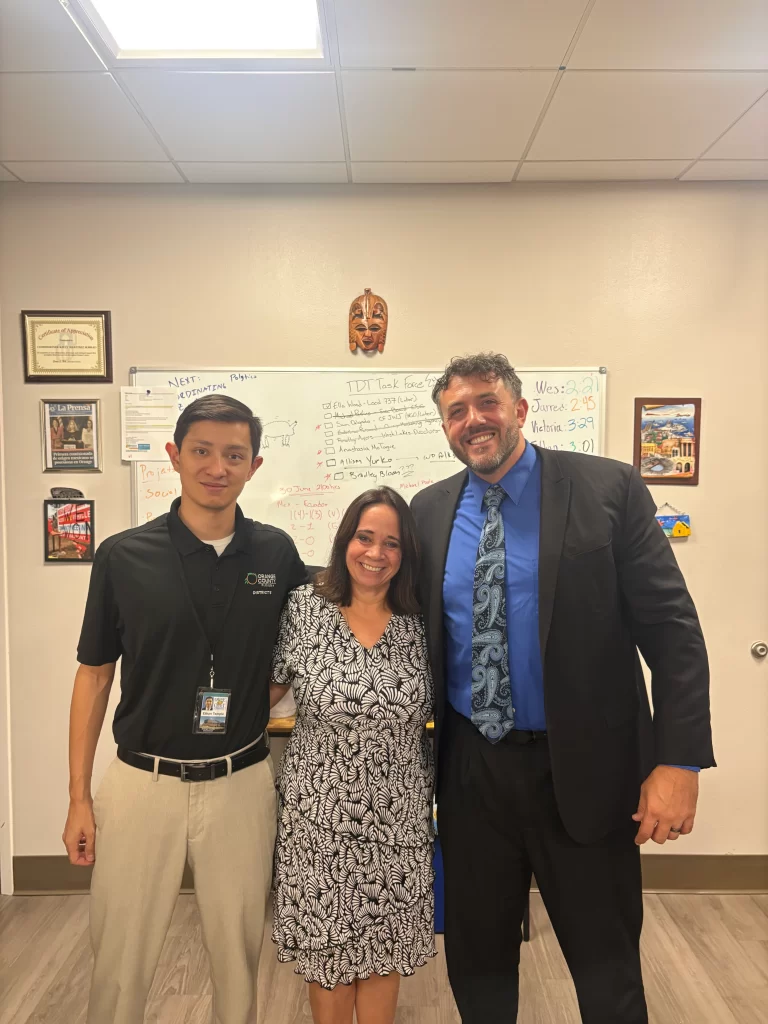
Frank Santini, Esq., a Florida e-bike accident lawyer and founder of Santini Personal Injury & Car Accident Law and Santini Research, recently met with Orange County Commissioner Kelly Martinez Semrad to discuss Florida e-bike safety, micromobility crash trends, and county-level crash data involving bicycles and vulnerable road users.
After Governor Ron DeSantis vetoed SB 382, Florida counties and municipalities were left without a new statewide framework for addressing many of the safety issues involving e-bikes, electric scooters, and other micromobility devices.
The meeting focused on the e-bike accident and fatality findings by Santini Research, which naturally leads into a practical question now facing many Florida communities:
How should local governments respond when transportation technology changes faster than the rules, infrastructure, enforcement standards, and rider education systems around it?
Why the SB 382 Veto Matters for Florida E-Bike Safety
SB 382 would have created new statewide rules for electric bicycles and certain micromobility devices. The bill included speed-related restrictions for e-bikes and other small transportation devices operating near pedestrians, but Governor DeSantis vetoed the bill on June 25, 2026.
That veto does not make e-bike safety issues disappear. Instead, it shifts more attention to local governments, including counties and municipalities, that are already seeing the effects of faster electric devices being used on:
- local roads;
- sidewalks;
- bike lanes;
- multi-use trails;
- school routes;
- parks and recreational areas;
- neighborhoods; and
- commercial corridors.
Florida law already defines electric bicycles and separates them into Class 1, Class 2, and Class 3 categories. Class 1 and Class 2 e-bikes are generally limited to motor assistance up to 20 miles per hour, while Class 3 e-bikes may provide assistance up to 28 miles per hour.
That classification system is important, but it does not answer every local safety question. Communities are still left to address where these devices may be operated, how rules should be enforced, how young riders should be educated, and how to distinguish lawful e-bikes from faster or modified devices that may function more like motor vehicles.
What the Crash Data Shows and What It Does Not Show
Santini Research presented county-level crash trends using data from the Florida Department of Highway Safety and Motor Vehicles, commonly known as FLHSMV. FLHSMV collects and publishes crash data to help lawmakers, public safety partners, researchers, the media, and the public understand traffic safety trends in Florida.
The data shows a major post-COVID increase in Florida bicycle fatalities and serious injuries across parts of the Orlando metro area. That trend is especially concerning because it coincides with the rapid growth of e-bikes, electric scooters, and other micromobility devices.
But the data must be interpreted carefully.
Current Florida crash reporting does not always perfectly separate traditional bicycles from e-bikes and other micromobility devices. That means the available crash data should not be used to claim that e-bikes are the sole cause of the increase in bicycle-related deaths or serious injuries.
The more accurate conclusion is this:
Florida is seeing a broader vulnerable-road-user safety problem, and the timing, volume, speed, and usage patterns of e-bikes and micromobility devices appear to be an important part of the conversation.
That distinction matters. The goal is not to blame every crash on one device. The goal is to identify a systems gap before more preventable injuries occur.
The Systems Gap: Faster Devices, Younger Riders, and Infrastructure That Has Not Kept Pace
The central issue is not simply that e-bikes exist. E-bikes can be useful, efficient, and enjoyable. They can reduce car trips, expand mobility, and help people travel longer distances without relying on a motor vehicle.
The safety problem arises when faster electric devices are introduced into environments that were designed around older assumptions about bicycles, pedestrians, and low-speed recreational use.
Many Florida communities are now dealing with overlapping issues:
- children and inexperienced riders operating faster devices;
- e-bikes and scooters being used on sidewalks and trails with pedestrians;
- confusion about right-of-way rules;
- inconsistent enforcement;
- limited rider education;
- modified or non-compliant devices;
- roads without safe bicycle infrastructure;
- motorists who do not expect bicycles or e-bikes to move at higher speeds; and
- local rules that have not kept up with modern micromobility technology.
The technology changed quickly. The safety framework did not.
Why Orange County and Local Governments Are Now in a Critical Position
Orange County and other Florida local governments are now in a difficult position. They must balance safety, mobility, personal freedom, enforcement practicality, and the needs of families, schools, neighborhoods, and vulnerable road users.
A thoughtful local framework may need to address several issues at once, including:
- Clear device classifications
Local rules should distinguish between lawful e-bikes, electric scooters, modified devices, mopeds, and other motorized vehicles. Without clear definitions, enforcement becomes difficult and public confusion increases. - Age-appropriate operation standards
Young riders may not fully appreciate speed, stopping distance, traffic gaps, sidewalk conflicts, or how quickly a driver can misjudge an e-bike’s approach speed. Local governments may need to consider whether certain devices or locations require age-based restrictions or education. - Sidewalk and trail safety
A device traveling 20 to 28 miles per hour can create serious risks when mixed with pedestrians, children, strollers, dogs, joggers, and older adults on sidewalks or multi-use trails. - Enforcement tools that are realistic
Rules that cannot be understood or enforced are unlikely to change behavior. Local governments need practical standards that law enforcement officers, parents, schools, and riders can understand. - Rider and parent education
Many families purchase e-bikes without fully understanding Florida law, device classifications, helmet considerations, right-of-way issues, or the risks of sidewalk and intersection conflicts. - Infrastructure planning
Bike lanes, trails, crossings, and traffic-calming measures may need to be evaluated through the lens of modern micromobility, not just traditional bicycle use.
This Is Not About Banning E-Bikes
The purpose of this research and discussion is not to ban e-bikes.
It is about catching up with reality.
Florida roads, sidewalks, and trails are now being used by a wider range of transportation devices than many communities were designed to handle. A modern safety framework should recognize that e-bikes and micromobility devices are not going away.
The better question is how to make their use safer, clearer, and more predictable for everyone.
That includes riders, pedestrians, drivers, parents, schools, law enforcement, and local governments.
Why This Matters to Injury Law and Public Safety
As a Florida e-bike accident lawyer and founder of Santini Personal Injury & Car Accident Law, Frank Santini represents injured e-bike riders while also directing Santini Research’s work on bicycle, e-bike, and micromobility safety.
E-bike and micromobility crashes raise complicated injury and liability questions, including:
- whether the device was legally classified as an e-bike;
- whether the rider was operating on a sidewalk, road, trail, or crosswalk;
- whether a motorist failed to yield;
- whether a child or inexperienced rider understood the risk;
- whether a device was modified to exceed legal speed limits;
- whether local ordinances applied;
- whether a school, rental company, property owner, driver, parent, or municipality may have relevant information; and
- whether available crash data accurately captures the type of device involved.
Those legal questions are important after a crash. But the larger public safety goal is to reduce the number of crashes in the first place.
A Local Opportunity After the SB 382 Veto
With SB 382 vetoed, Florida’s e-bike safety debate is likely to continue at the local level. Counties and municipalities may now become the primary places where rules are tested, refined, and enforced.
Orange County is currently reviewing a draft e-bike and micromobility ordinance prepared by the Orange County Sheriff’s Office, with the proposal expected to come before the County for consideration at its August 4 meeting.
Separately, Attorney Santini will present on e-bike law, e-bike accidents, and e-bike safety at Orange County District 5’s Neighborhood Advisory Council meeting on August 26, 2026, an opportunity to share Santini Research’s findings directly with the community most affected by these local policy decisions.
Orange County’s discussion is part of a larger statewide issue: how Florida communities should respond to faster electric transportation devices being used in spaces originally designed for pedestrians, bicycles, and cars.
Santini Research will continue reviewing FLHSMV crash data, local ordinance developments, and micromobility safety trends across Florida.
The goal is simple:
Florida should not wait for more serious injuries and deaths before modernizing its approach to e-bike and micromobility safety.
Community Discussion on E-Bike and Micromobility Safety
Orange County Commissioner Kelly Martinez Semrad shared the meeting with Attorney Frank Santini publicly on social media to help bring more attention to the local e-bike and micromobility safety discussion.
Public engagement matters because these issues affect more than legal claims after crashes. They involve families, schools, neighborhoods, pedestrians, drivers, law enforcement, local governments, and riders trying to understand how faster electric devices should safely fit into existing roads, sidewalks, and trails.
View this post on Instagram
Santini Research Data Cited in Orange County E-Bike Safety Discussions
Following Attorney Santini’s meeting with Commissioner Semrad, News 6/ClickOrlando reported that Orange County officials had met with a personal injury attorney who shared crash data. In the next sentence, News 6 quoted Commissioner Semrad stating that bicycle fatalities had increased 50 percent since COVID. The News 6 article did not identify Attorney Santini by name. Santini Research’s underlying FLHSMV analysis found that average annual Florida bicycle fatalities increased 46.6%, from 147.7 per year during 2017–2019 to 216.5 per year during 2022–2025.
The research has also entered the broader Central Florida e-bike policy discussion. Mast Newsroom’s coverage of MetroPlan Orlando’s July 8, 2026 e-bike and micromobility discussion listed this Santini Research article as one of the seven source documents used for its reporting and identified the source as “Santini Research.”
Attorney Santini’s Florida e-bike accident practice combines this crash-data research with Florida e-bike law, insurance analysis, and the investigation of individual e-bike injury claims.
FAQ Section
What was SB 382?
SB 382 was a Florida bill that would have created new statewide rules for e-bikes and certain micromobility devices. Governor Ron DeSantis vetoed the bill in June 2026, leaving many e-bike safety issues to be addressed through existing law and possible local action.
Are e-bikes legal in Florida?
Yes. Florida law recognizes electric bicycles and divides them into Class 1, Class 2, and Class 3 categories. These classifications generally depend on whether the motor assists only while pedaling, whether the motor can propel the bike without pedaling, and the speed at which motor assistance stops.
Does Florida crash data separately track e-bike crashes?
Not perfectly. Current crash data often captures bicycle-related crashes but may not always clearly distinguish traditional bicycles from e-bikes and other micromobility devices. That is why e-bike safety trends should be discussed carefully and with appropriate limits. SB 382 would have required policed departments and Sheriff’s offices across Florida to start tracking e-bike crashes as a separate category. It remains to be seen if Florida law enforcement agencies will start tracking e-bike accidents as a separate category despite not being required by law to do so.
Why are local governments important after the SB 382 veto?
Without a new statewide framework from SB 382, counties and municipalities may play a larger role in addressing where e-bikes and micromobility devices can operate, how rules are enforced, how young riders are educated, and how local infrastructure should adapt.
Is Attorney Santini speaking at any upcoming meetings on e-bike safety?
Yes. Following his meeting with Vice-Mayor and Commissioner Kelly Martinez Semrad’s office, Attorney Frank Santini will present on e-bike law, e-bike accidents, and e-bike safety at Orange County District 5’s Neighborhood Advisory Council meeting on August 26, 2026. The presentation will share Santini Research’s crash-data findings directly with the community most affected by Orange County’s local e-bike and micromobility policy decisions.
Is Santini Research trying to ban e-bikes?
No. The issue is not whether e-bikes should exist. The issue is how Florida can create safer, clearer rules for faster electric devices being used by riders of different ages and experience levels on roads, sidewalks, and trails.

Let Us Get You Started In The
Right Direction
Fields marked with an * are required
Riverview Office
7269 Bucks Ford Dr.
Riverview, FL 33578

Call Us Today 813-445-6121
Tampa Office
9270 Bay Plaza Blvd Suite 618
Tampa, FL 33619
© Copyright 2026 Santini Personal Injury & Car Accident Law. All Rights Reserved.
Disclaimer | Site Map | Privacy Policy
*Images are obtained under license from Canva and other third-party stock image providers, with attribution included where required.
Digital Marketing By 