
Temple Terrace Ethylene Oxide Lawsuits: Legal Questions After Tampa Bay Times Reporting
Our Commitment To Excellence






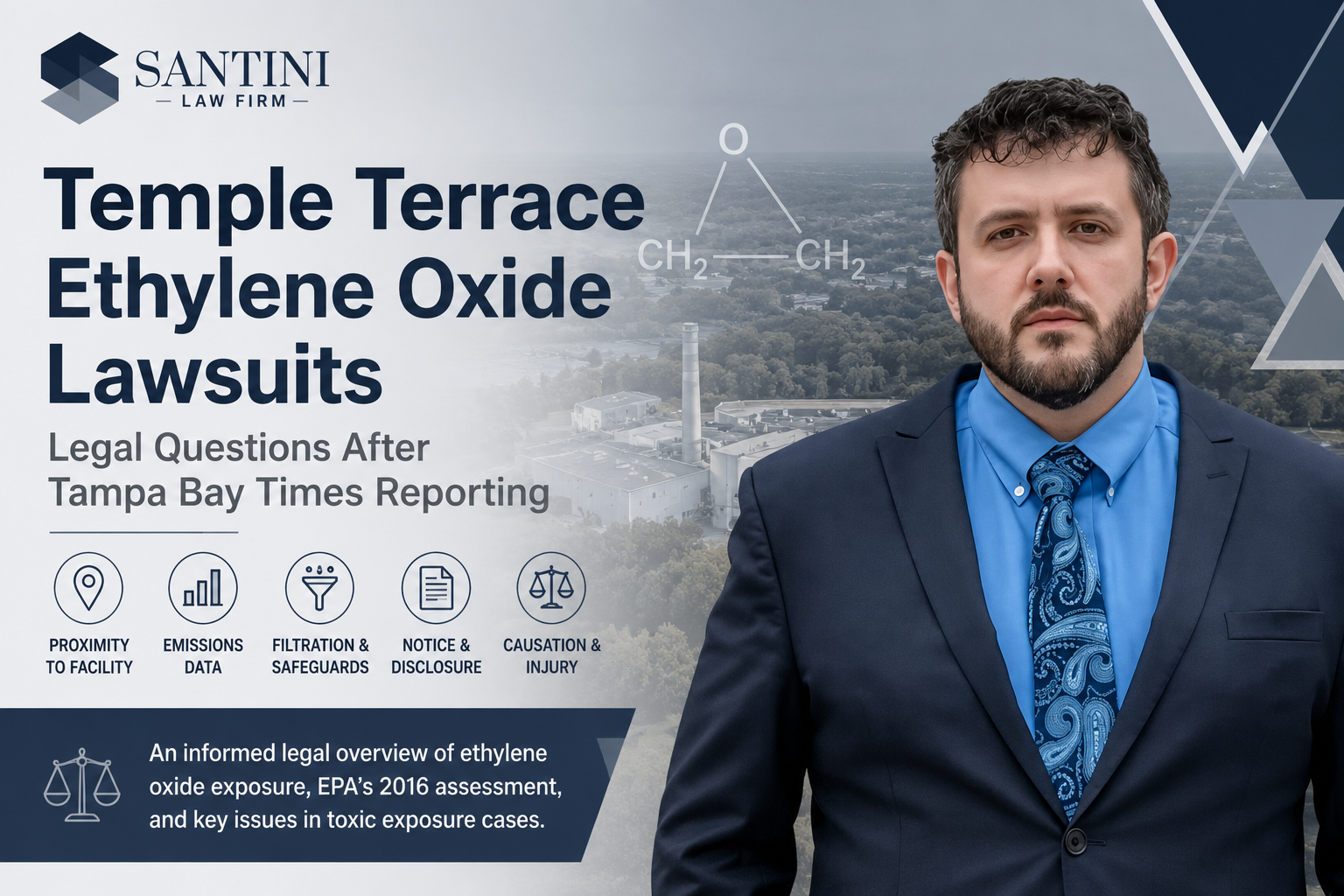
Recent reporting by the Tampa Bay Times has brought renewed public attention to ethylene oxide emissions near Temple Terrace, Florida. The story has also generated broader discussion about environmental exposure, industrial safety, and the legal questions that can arise when communities live or work near facilities using potentially hazardous chemicals.
Florida-based media page Beyond Florida recently covered the issue and asked Attorney Frank Santini to weigh in on some of the legal and toxic exposure questions that often emerge in cases involving industrial emissions and long-term environmental exposure.
What Is Ethylene Oxide?
Ethylene oxide (EtO) is a chemical commonly used to sterilize medical equipment and certain products that cannot be sterilized using traditional heat or steam methods. It has been used for decades in industrial and medical sterilization processes across the United States.
The chemical itself is not new, but public scrutiny surrounding long-term exposure risks increased significantly after updated federal assessments over the last decade. Ethylene oxide is colorless and may not be easily detectable without monitoring systems or emissions data. Because of this, public concern often centers around whether nearby communities were aware of emissions levels and whether sufficient safeguards were in place.
In recent years, several communities across the country have raised concerns about facilities operating near homes, schools, and businesses (including elsewhere in Florida). Questions frequently arise about emissions controls, filtration systems, air monitoring, and whether companies responded appropriately after evolving scientific findings and regulatory guidance.
Why the EPA’s 2016 Assessment Matters
One of the major turning points in the national discussion surrounding ethylene oxide occurred in 2016, when the Environmental Protection Agency (EPA) released an updated risk assessment that significantly changed the agency’s understanding of the chemical’s cancer risk. The EPA’s assessment concluded that ethylene oxide posed a greater carcinogenic risk than previously understood, particularly for people experiencing long-term exposure near facilities emitting the chemical.
That assessment later became central to regulatory discussions, community concerns, and litigation involving sterilization facilities around the country. Importantly, many toxic exposure cases are not based solely on whether a chemical exists or is used lawfully.
Instead, litigation often focuses on questions such as:
- What emissions levels existed?
- How close were nearby residents, workers, or schools?
- What filtration or mitigation systems were in place?
- What did companies and regulators know at various points in time?
- Did facilities alter safeguards after updated risk findings became public?
Those issues frequently become central in environmental litigation because toxic tort cases often involve long periods of exposure rather than a single identifiable event.
Legal Issues in Toxic Exposure Cases
Environmental exposure and toxic tort litigation are often among the most scientifically and legally complex cases in civil law.
“Unlike a car crash where the impact is immediate and obvious, toxic exposure cases are battles of invisible timelines,” explains Attorney Frank Santini. “The central legal fight isn’t just proving that a hazardous chemical was present in the air – it’s proving scientifically that years of invisible emissions are the direct, legal cause of a community’s health crisis.”
One major legal issue is proximity. Residents living or working near facilities alleged to emit hazardous substances may argue that long-term exposure increased health risks or contributed to medical conditions. Defendants, on the other hand, frequently challenge whether exposure levels were sufficient to establish causation or whether other environmental and lifestyle factors could explain health outcomes.
Another important issue involves notice and safeguards. In many toxic exposure cases nationwide, plaintiffs focus on whether companies continued operating without implementing upgraded emissions controls, filtration systems, or additional mitigation measures after updated scientific findings became available. Data also becomes critical. Air monitoring records, emissions reporting, engineering documents, regulatory communications, and historical operational practices may all become relevant in determining whether exposure levels exceeded accepted thresholds or whether additional precautions were warranted.
Even where concerns exist, causation can still be heavily contested. Courts often require plaintiffs to establish not only exposure, but also that the exposure was capable of causing a particular injury and did, in fact, contribute to a specific medical condition.
What Residents Usually Need To Prove
Residents pursuing toxic exposure claims generally must establish several key elements, including exposure, causation, and damages. That often requires scientific evidence, expert analysis, medical documentation, and detailed records regarding emissions and proximity to facilities.
In many environmental cases, plaintiffs may also attempt to demonstrate that companies or operators failed to implement reasonable safeguards after learning of updated scientific or regulatory concerns. Defendants may respond by arguing that they complied with existing regulations, industry standards, or permit requirements.
As with many environmental and toxic exposure matters, these cases are highly fact-specific and frequently involve evolving scientific evidence and competing expert opinions.
How the Public Can Get Involved
Alongside legal avenues, residents can also have a voice in the regulatory process. The EPA is currently accepting public comments regarding updated National Emission Standards for Hazardous Air Pollutants, specifically concerning ethylene oxide emissions at sterilization facilities.
You can review the proposed rules here and submit a public comment via the Federal Register.
Video Commentary
Beyond Florida recently discussed the Temple Terrace ethylene oxide reporting and asked Attorney Frank Santini to weigh-in on several of the legal issues that often arise in toxic exposure litigation.
People concerned about potential environmental or toxic exposure issues should speak with qualified medical professionals and experienced legal counsel regarding their specific circumstances.
If you or a loved one have questions regarding potential toxic exposure or environmental injury claims in the Tampa Bay area, learn more about our Tampa personal injury practice here.

Let Us Get You Started In The
Right Direction
Fields marked with an * are required
Riverview Office
7269 Bucks Ford Dr.
Riverview, FL 33578

Call Us Today 813-445-6121
Tampa Office
9270 Bay Plaza Blvd Suite 618
Tampa, FL 33619
© Copyright 2026 Santini Personal Injury & Car Accident Law. All Rights Reserved.
Disclaimer | Site Map | Privacy Policy
*Images are obtained under license from Canva and other third-party stock image providers, with attribution included where required.
Digital Marketing By 