

What to Do If You’re a New Jersey Driver Injured in a Florida Car Accident
Our Commitment To Excellence




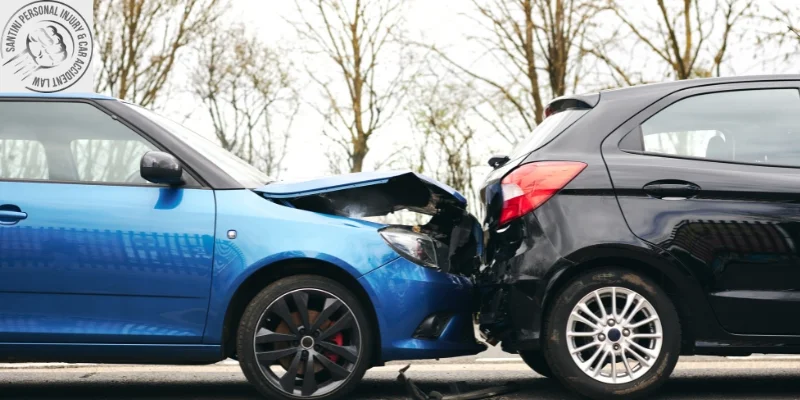
Being hurt in a car accident is frightening enough. Being hurt in a state that isn’t your own adds a whole other layer of confusion. You’re dealing with unfamiliar roads, an unfamiliar hospital, and now unfamiliar insurance rules. Florida and New Jersey are both no-fault states, but they operate differently, and those differences can quietly affect how much compensation you’re able to recover.
What do you do when you’re an NJ driver injured in Florida? First, you must know that Florida law governs the accident. That means Florida’s statutes, Florida’s court system, and Florida’s no-fault Personal Injury Protection (PIP) rules will shape your claim from day one. But your New Jersey insurance policy likely follows you across state lines, which creates a layered situation that’s worth understanding before you sign anything or accept a settlement offer.
The team at Santini Personal Injury & Car Accident Law is licensed in both Florida and New Jersey, which makes the firm uniquely equipped to handle exactly this kind of cross-state situation. Attorney Frank Santini has represented injury victims throughout Hillsborough County and the Tampa metro area, and he understands how both states’ rules interact when visitors are hurt on Florida roads.
Key Takeaways
- Florida law governs your accident regardless of where you’re registered or insured.
- Your New Jersey PIP coverage typically follows you into Florida and can cover initial medical bills.
- Florida’s serious injury threshold determines whether you can sue the at-fault driver for pain and suffering.
- Florida’s statute of limitations gives you two years from the date of the crash to file a personal injury lawsuit.
- You need an attorney familiar with both states’ insurance systems to avoid costly mistakes.
Ready to talk through your situation? Contact Santini Personal Injury & Car Accident Law for a free consultation. There’s no fee unless they win your case.
Florida Law Applies – Not New Jersey’s
When a car accident happens in Florida, Florida law controls the claim. It doesn’t matter that you’re a licensed New Jersey driver or that your vehicle is registered there. The state where the crash occurred sets the rules for fault, damages, and legal deadlines.
Florida operates a no-fault insurance system under Florida Statute § 627.736, which requires every driver on Florida roads to carry at least $10,000 in Personal Injury Protection (PIP).
PIP pays 80% of reasonable medical expenses and 60% of lost wages resulting from a crash, regardless of who caused it. The state’s no-fault rules were designed to speed up compensation for injured parties and reduce the burden of minor claims on the court system.
If you drove your own vehicle from New Jersey to Florida, you might be traveling under a policy that automatically adjusts to meet the minimum coverage requirements of whatever state you’re driving through. That said, you should verify this with your insurer, because coverage gaps exist and insurers don’t always volunteer that information.
Does Your New Jersey PIP Cover You in Florida?
Most New Jersey auto insurance policies include PIP coverage that extends beyond state borders. New Jersey is also a no-fault state, and the state’s PIP provisions typically apply when the insured is injured anywhere within the United States. If you were driving your own registered vehicle at the time of the accident, your New Jersey PIP will likely kick in first to cover your initial medical bills.
There’s an important distinction worth noting: New Jersey’s PIP coverage requirements are separate from Florida’s. If your NJ policy doesn’t meet Florida’s $10,000 PIP minimum, most policies contain a built-in provision that automatically bumps coverage up to meet the state minimum where you’re driving. But relying on an assumption here can be costly. Check your declarations page or call your insurer to confirm.
If you were riding as a passenger in someone else’s vehicle, the situation gets more complicated. Your PIP coverage may or may not follow you into another person’s car, depending on your specific policy language. A car accident attorney who handles cross-state car accident claims can review your policy and advise you quickly.
Florida’s Serious Injury Threshold: When You Can Sue for More
Florida’s no-fault system limits your ability to sue the at-fault driver directly for pain and suffering unless your injuries cross a serious injury threshold. This is one of the most important legal concepts for out-of-state visitors to understand.
What qualifies as a serious injury in Florida?
Under Florida law, you can step outside the no-fault system and pursue a liability claim against the at-fault driver if you’ve suffered:
- Significant and permanent loss of an important bodily function
- Permanent injury within a reasonable degree of medical probability
- Significant and permanent scarring or disfigurement
- Death
If your injuries meet this threshold, you gain the right to seek compensation for pain and suffering, emotional distress, and other non-economic damages. Given how high Florida’s medical costs can run, this distinction can mean the difference between a partial recovery and a full one. This is why seeing a doctor immediately after the accident and documenting every diagnosis matters so much.
Steps to Take Right After a Florida Car Accident as an Out-of-State Driver
The actions you take in the first 24 to 72 hours can have an outsized impact on your claim. Florida has specific rules that shorten some windows. Here’s what to do:
- Call 911 and get a police report
Florida law requires drivers to report accidents involving injury, death, or significant property damage to law enforcement. The Florida Department of Highway Safety and Motor Vehicles (FLHSMV) maintains these reports, and they’ll be critical evidence for your claim. Ask for the crash report number before you leave the scene. - Seek medical care within 14 days
This is not optional. Florida law requires you to receive initial medical treatment within 14 days of the accident to access your PIP benefits. Missing this window can eliminate your ability to recover PIP coverage entirely. Even if you feel fine, get checked out. Internal injuries and soft tissue damage often have delayed symptoms. - Notify your New Jersey insurer promptly
Contact your New Jersey insurance company and inform them you were in an accident in Florida. Provide the basic facts and ask specifically how your PIP and uninsured/underinsured motorist coverage applies to out-of-state accidents. Stick to the facts, and do not give a recorded statement until you’ve spoken with an auto accident attorney. - Document everything
Photos of the accident scene, vehicle damage, visible injuries, road conditions, and any contributing factors. Witness names and contact information. A written account of the accident from your perspective, written while your memory is fresh. These details support both the liability and damages aspects of your claim.
The Insurance Complexity Most Out-of-State Visitors Miss
Florida has one of the highest rates of uninsured drivers in the country. In fact, over 1 in 5 drivers on Florida roads carry no insurance at all. As a New Jersey driver, your standard auto policy includes uninsured motorist (UM) coverage because it’s required there. But whether that UM coverage extends to a Florida accident, and how it interacts with Florida’s no-fault system, depends entirely on your specific policy language. Some New Jersey UM policies are limited in how they respond to out-of-state crashes. Having a car accident attorney review your policy before settling anything could mean recovering tens of thousands of dollars more.
Frequently Asked Questions
Can I file my claim in New Jersey if the accident happened in Florida?
Generally, no, the accident occurred in Florida, so Florida courts have jurisdiction over any lawsuit. Florida’s Long-Arm Statute gives Florida courts authority over out-of-state drivers who cause accidents here, and the same principle applies in reverse. Your PIP claim goes through your own insurer, but any lawsuit against the at-fault driver would be filed in Florida.
What if the at-fault Florida driver has no insurance?
Your own uninsured motorist coverage is your primary protection in that scenario. New Jersey requires UM coverage on standard auto policies, and most policies extend that protection to out-of-state accidents. You’ll want to confirm the specific terms with your insurer, and an attorney can help push back if the company tries to limit your recovery.
How long do I have to seek medical treatment to qualify for Florida PIP?
You must receive initial medical treatment within 14 days of the accident to access PIP benefits under Florida law. That window starts on the date of the crash, not when you return home to New Jersey. See a doctor in Florida before you leave if at all possible, then continue follow-up care with your physician at home.
Do I need a Florida-licensed attorney, or can my New Jersey lawyer handle this?
You need an attorney licensed to practice in Florida. Some attorneys are licensed in multiple states, which is ideal for cross-border claims. Attorney Frank Santini at Santini Personal Injury & Car Accident Law holds licenses in both Florida and New Jersey, so you’d have one attorney who knows both systems rather than coordinating between two separate firms.
Santini Personal Injury & Car Accident Law: Your Car Accident Law Firm
You came to Florida and ended up in the middle of something you didn’t ask for. Cross-state car accident claims require a firm that actually understands both systems, not one that has to learn Florida law after you’ve already hired them.
Attorney Frank Santini is licensed in Florida and New Jersey, and has spent years handling car accident claims in Hillsborough County and throughout the Tampa area. His team knows how Florida’s no-fault rules interact with out-of-state policies, how to document injuries that meet the serious injury threshold, and how to deal with insurers who try to minimize what you’re owed.
Contact our firm today for a free consultation. You pay nothing unless we win.

Let Us Get You Started In The
Right Direction
Fields marked with an * are required
Santini Personal Injury
& Car Accident Law
7269 Bucks Ford Dr.
Riverview, FL 33578

Call Us Today 908-329-2003
Santini Personal Injury
& Car Accident Law
9 Hanover Street
Phillipsburg, NJ 08865
© Copyright 2026 Santini Personal Injury & Car Accident Law. All Rights Reserved.
Disclaimer | Site Map | Privacy Policy
*Images are obtained under license from Canva and other third-party stock image providers, with attribution included where required.
Digital Marketing By 