
NFL AI Digital Prospect
Our Commitment To Excellence






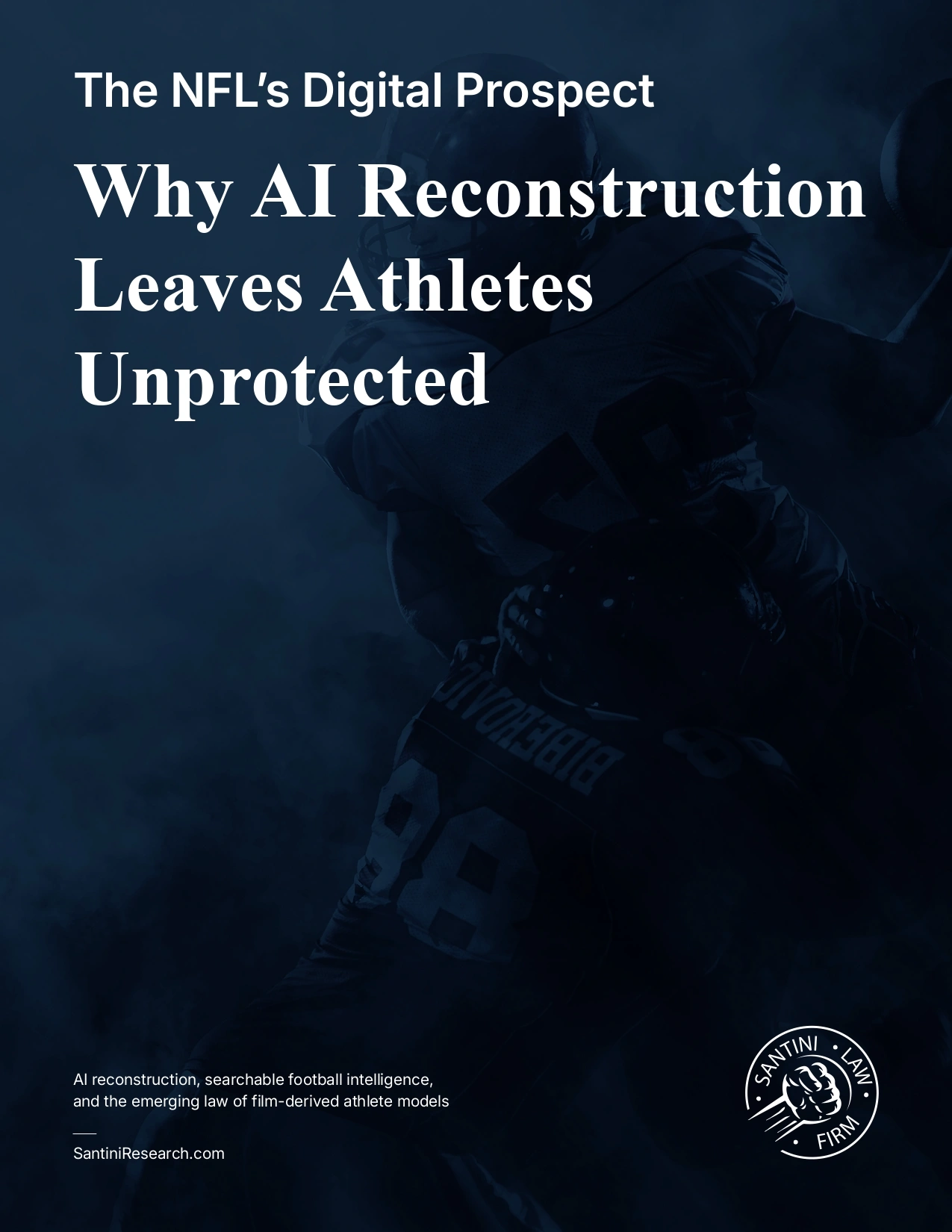
The NFL draft is no longer just about watching film and timing forty-yard dashes. Teams are beginning to translate prospects into data: reconstructing how players move, react, and survive contact inside real football conditions. This shift means players are not only being evaluated on what they did, but on whether their movement patterns resemble those that succeed in the NFL.
The technology is not science fiction. Public tools already convert film into tracking data, compare reps across massive databases, and model how plays unfold. The real edge is not just finding a good rep; it is comparing it to an internal library of NFL examples to determine whether a player’s movement holds up under greater speed, force, and tighter reaction windows. Some teams are further ahead than others, and those differences may shape draft boards in ways players cannot see.
But the law has not caught up. Current rules address wearable data and public likeness, not the internal “digital prospect” built from film, models, and proprietary comparisons. That leaves players exposed to invisible labels and evaluations that can affect their careers without any right to access, challenge, or understand them.We can’t stop teams from using better tools to evaluate talent. But we can demand transparency and accountability. Read our breakdown of how AI is changing draft evaluation, what the “digital prospect” really is, and why players need new protections before this system becomes the league standard.

Subscribe for Santini Research Reports

Call Us Today 888-645-3055
Riverview Office
7269 Bucks Ford Dr.
Riverview, FL 33578
Lehigh Valley Office
New Jersey & Pennsylvania
9 Hanover Street
Phillipsburg, NJ 08865
Tampa Office
9270 Bay Plaza Blvd Suite 618
Tampa, FL 33619
© Copyright 2026 Santini Personal Injury & Car Accident Law. All Rights Reserved.
Disclaimer | Site Map | Privacy Policy
*Images are obtained under license from Canva and other third-party stock image providers, with attribution included where required.
Digital Marketing By 